NFL Over/Under Totals Betting: How to Read the Number and Find Value
 Available in US
Why Totals Deserve as Much Attention as the Spread
For two full seasons I ignored the totals market entirely. Spreads were my thing — I understood the dynamics, tracked the numbers, and felt confident in my picks. Then a fellow bettor showed me his end-of-season records: 58% hit rate on totals versus 52% on spreads, with nearly identical unit profit because the pricing was the same. That was the moment I realised I had been leaving money on the table by dismissing half the game.
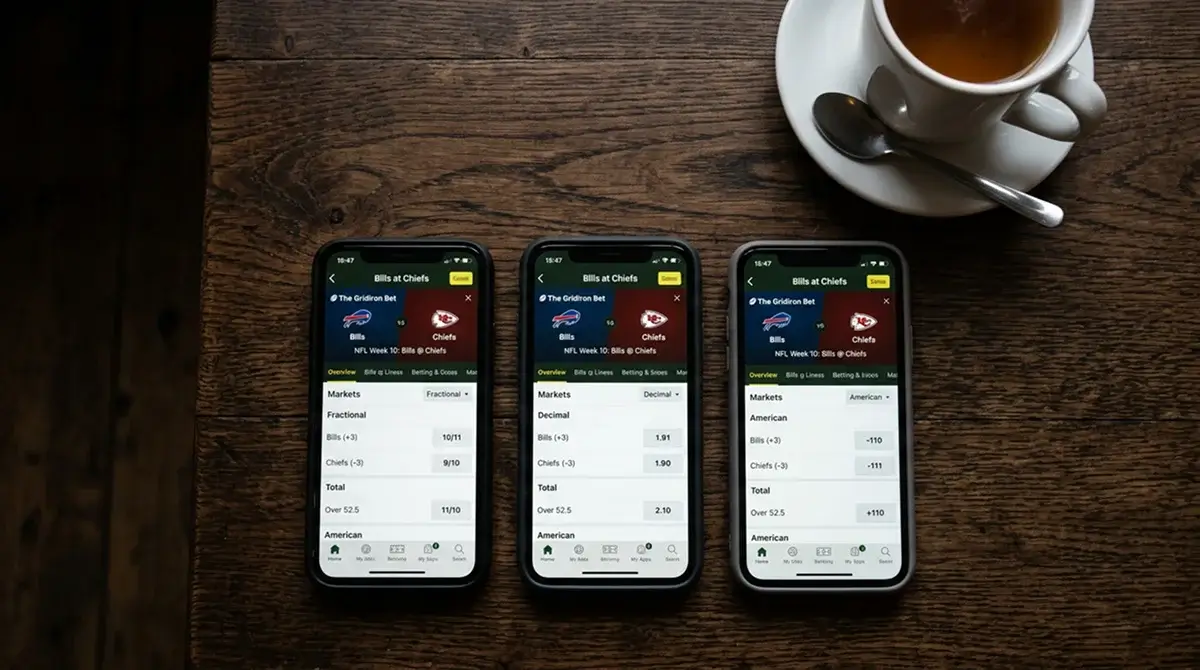
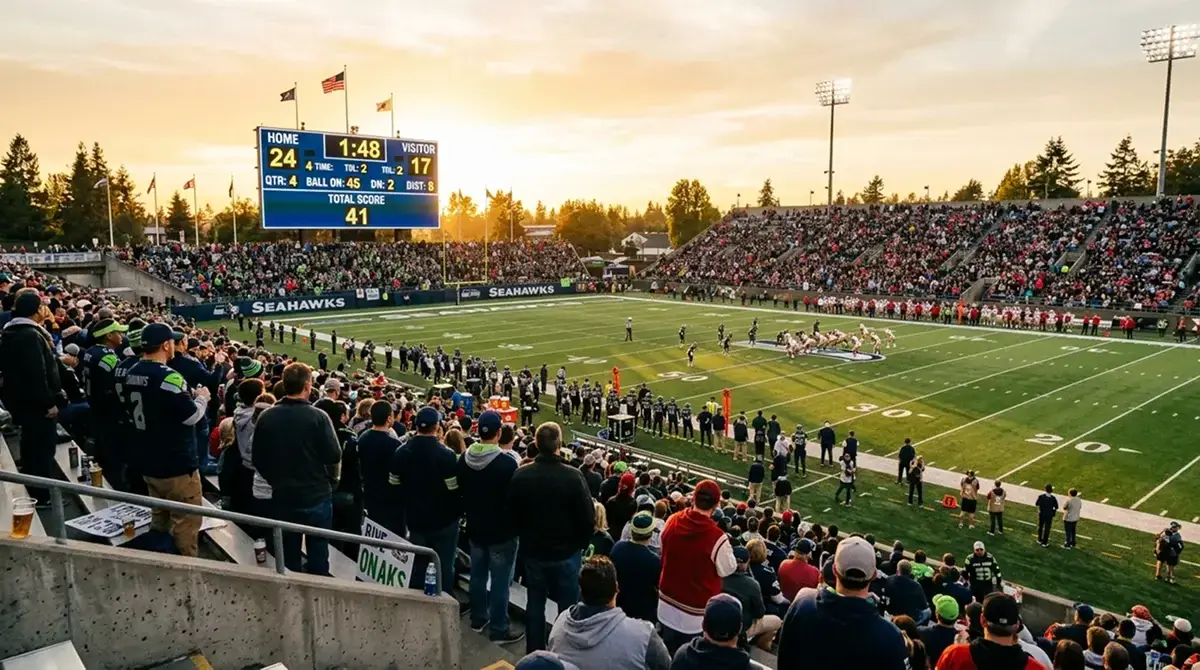
The over/under — also called the total — is a bet on whether the combined final score of both teams will be higher or lower than a number set by the sportsbook. If the line is 47.5 and the game finishes 27-24 (51 total points), the over wins. If it finishes 20-17 (37 total), the under wins. The half-point eliminates draws, so every game has a definitive result.
Totals betting asks a fundamentally different analytical question than the spread. The spread is about relative strength — which team is better and by how much. Totals are about the style and pace of the game itself. Two elite teams with high-powered offences might produce a total of 52. Two defensive powerhouses might sit at 38. Your job is not to pick a side but to predict the character of the contest.
See also: check american football betting for all NFL wagering guides.
How Sportsbooks Set the Total and Where the Number Comes From
I spent a week in 2022 building my own totals model from scratch — pace metrics, offensive efficiency, defensive DVOA, red-zone rates, weather forecasts. My opening-week lines correlated with the sportsbook’s lines at about 0.91. That number humbled me. The books are good at this. But that 0.09 gap is where value lives.
Sportsbooks set the total using a combination of power ratings, pace adjustments, and situational factors. Each team’s expected points contribution is estimated independently and then summed. A team projected to score 26 against an opponent projected to score 23 produces an opening total of 49. The line is then adjusted for venue (dome versus outdoor, altitude), weather forecast, and public money flow.
The total is arguably the most efficient pre-match market in NFL because it receives balanced action from sophisticated bettors and casual punters alike. Operators holding 10.15% of the total regulated US handle of $165.58 billion in 2025 rely on tight totals markets for steady revenue. The margin on a typical NFL total is 4.5-5% — competitive with spreads and significantly tighter than prop markets.
Where the sportsbook model tends to lag is in accounting for intangible game-script factors. Two teams with identical offensive ratings can produce very different total-point outcomes depending on game tempo, coaching philosophy, and time-of-possession strategy. A team that runs a slow, methodical offence naturally produces fewer total possessions per game, which suppresses both sides of the scoring equation. If the sportsbook weights recent scoring averages without fully adjusting for tempo, the total can be set too high.
Offensive Pace and Defensive Efficiency: The Two Numbers That Matter Most
Every season I strip my totals analysis down to two core metrics, and every season those two metrics outperform more complex models. The first is plays per game — a direct measure of offensive pace. The second is opponent points per drive — a measure of defensive efficiency that adjusts for how many possessions the defence faces.
Plays per game tells you how fast both teams operate. A matchup between two up-tempo offences that each run 68 plays per game generates far more scoring opportunities than a clash between two grind-it-out teams averaging 58 plays. The difference — twenty extra plays across the two teams — translates to roughly two additional possessions per side, which at league-average efficiency is worth about five to seven points. That swing can push an under into an over territory entirely.
Opponent points per drive is superior to raw points-allowed statistics because it adjusts for pace. A defence that allows 24 points per game while facing 13 drives is performing differently from one that allows 24 points while facing 10 drives. The first surrenders 1.85 points per drive; the second, 2.40. When facing a high-tempo offence that forces 14 drives, the first defence might allow 26 points and the second might allow 34. Same “24 points per game” defence on paper; vastly different impact on the total.
Combine pace and defensive efficiency for both teams, and you have a framework that catches the majority of totals mispricing. I cross-reference my projections with the sportsbook total and flag any game where my number diverges by 2.5 points or more. That threshold keeps me focused on genuine discrepancies rather than chasing marginal differences that fall within normal variance.
Weather, Altitude, and Venue Effects on NFL Totals
I backed the over in a December game at Soldier Field once — wind chill of minus twelve, gusts over 30 miles per hour. The final score was 9-6. Lesson learned: weather is not a footnote in totals betting. It is a headline factor that deserves the same weight as any statistical metric.
Wind is the most impactful weather variable. Sustained winds above 15 mph measurably reduce passing efficiency, which suppresses scoring. The effect compounds when both teams are affected, because the total reflects the combined output. Rain has a smaller but still significant impact, primarily on ball security — turnovers increase, which disrupts scoring drives. Cold temperatures alone have minimal effect on modern NFL teams trained in climate-controlled facilities, but cold combined with wind is a potent under signal.
Altitude matters at exactly one NFL venue: Denver. The Mile High City sits at 5,280 feet above sea level, and the thinner air increases the distance of kicks and slightly benefits passing trajectories. The sportsbook adjusts for this in the opening line, but visiting teams — particularly those from sea-level cities — sometimes underperform in Denver due to conditioning issues in the thin air. The historical data shows Denver games running about 1.5 points above the model’s non-altitude projection, and the market typically prices in about 1 point of that. The remaining half-point is a small but consistent edge on overs in Denver.
Domed stadiums — Atlanta, New Orleans, Las Vegas, Indianapolis, Houston, and the newer retractable-roof venues — eliminate weather as a variable entirely. Games in domes average about 2-3 more total points than outdoor games, and the sportsbook accounts for this. But dome games also produce lower variance in final totals because the controlled environment removes the tail events (blizzards, downpours, gale-force winds) that create extreme unders. If you bet unders in domes, the ceiling for scoring is higher and the protection from weather-driven suppression is gone.
See also: adjust your totals bets with our NFL teaser bets guide.
Totals and Bet Builders: A Practical Pairing
Totals do not exist in isolation. Your view on the total informs — and should be informed by — your views on other markets. If you expect a high-scoring game (over), that belief has implications for player props: quarterbacks are more likely to hit passing-yard overs, and touchdown scorer markets become more attractive. If you expect a low-scoring grind (under), rushing props gain appeal because both teams are likely controlling clock on the ground.
This interconnection is where totals analysis pays the biggest dividends. A strong totals thesis acts as an anchor for your entire game-day position. The $8.52 billion global American football betting market keeps expanding because punters are discovering these cross-market connections — and the sportsbook, while excellent at pricing individual markets, sometimes fails to capture the full correlation between the total and its downstream implications. That gap is where the thoughtful bettor earns an edge.
What happens to my over/under bet if the total lands exactly on the number?
If the sportsbook sets the total at a whole number — say, 47 — and the combined score is exactly 47, the bet is a push and your stake is returned. Most NFL totals use half-points (47.5, 48.5) to eliminate this possibility, but whole-number lines occasionally appear, especially on early-release markets.
Do NFL totals include overtime scoring?
Yes. Unless your sportsbook specifies otherwise, the total includes all points scored in regulation and overtime. This is important for unders — a game that sits comfortably under the total at the end of regulation can be pushed over by overtime scoring. Check your sportsbook’s rules, as some operators offer regulation-only totals as a separate market.
Published by the American Football Betting team.