NFL Over/Under Betting Explained: How Totals Markets Work for UK Punters
 Available in US
- What Totals Betting Is and Why It Appeals to NFL Newcomers
- How NFL Totals Lines Are Set and What Moves Them
- Weather, Pace, and Defence: The Three Drivers of NFL Scoring
- Reading Totals on a UK Sportsbook: Pricing and Format
- Over/Under Strategies That Hold Up Across Full Seasons
- First-Half and Quarter Totals: Smaller Markets, Wider Edges
- When Totals and Spreads Collide: Building a Complete Game Thesis
- NFL Over/Under Betting FAQ
What Totals Betting Is and Why It Appeals to NFL Newcomers
My first NFL totals bet was an accident. I meant to back the Packers on the spread but fat-fingered the bet slip on my phone and ended up on the over 47.5 at 10/11. The game finished 31-24 — a combined 55 points — and I collected without having any idea what I was doing. That accidental win taught me something deliberate analysis later confirmed: totals betting strips away the question of who wins and replaces it with something simpler. How much scoring will this game produce?
An NFL over/under bet — called a “total” in industry terminology — is a wager on the combined final score of both teams. The sportsbook sets a number, say 44.5, and you back either the over (45 or more combined points) or the under (44 or fewer). It does not matter which team scores what. A 35-10 blowout and a 24-21 thriller both hit the over if the combined points exceed the line. The simplicity is the appeal: you do not need to evaluate team quality, coaching matchups, or home-field advantage in the same way you do for a spread. You need to understand scoring environments.
The NFL totals market has grown enormously. The global american football betting market reached $8.52 billion in 2025 and is projected to hit $9.5 billion by end of 2026, with totals capturing a significant share of that handle. In the UK specifically, where 10% of the adult population bets on sport online, totals have become one of the most accessible NFL markets because they reward general football knowledge — understanding that a rainy outdoor game between two strong defences will produce fewer points than a dome game between high-powered offences requires no expertise in American football terminology. It requires pattern recognition, and UK sports bettors are very good at pattern recognition.
There is a deeper reason totals appeal to analytical bettors. Scoring is more predictable than game outcomes. A team’s offensive and defensive efficiency metrics are more stable week to week than their win-loss record, because wins and losses incorporate variance (turnovers, special teams, referee decisions) that efficiency metrics filter out. This stability means that a well-researched totals position has a shorter path to positive expected value than a spread position on the same game. I split my NFL betting roughly 40/60 between spreads and totals, and the totals side has generated the more consistent returns across every season I have tracked.
See also: return to american football betting for more NFL market guides.
How NFL Totals Lines Are Set and What Moves Them
The number you see on your sportsbook screen did not appear from nowhere. Behind every NFL total sits a model, and understanding how that model thinks gives you an edge in identifying when it is wrong.
Sportsbooks set the opening total using a combination of offensive and defensive efficiency ratings for both teams, adjusted for venue (indoor stadiums produce higher totals than outdoor), recent scoring trends, and injury reports. The opening number typically appears on Sunday evening for the following week’s games, alongside the spread. At this stage, limits are low — the sportsbook is effectively inviting sharp bettors to tell them whether the number is correct. If informed money hits the over at 44.5 within the first few hours, the line moves to 45 or 45.5. If the under attracts sharp action, it drops.
By Wednesday, the total has usually absorbed its first wave of adjustments and settles into a range that persists until Saturday or Sunday morning. This midweek window is where I do most of my totals analysis, because the line reflects both the opening model and early sharp correction but has not yet absorbed the noisy public betting that floods in on game day. The second major movement comes on Sunday morning between 10:00 and 13:00 UK time, when inactive reports (final injury confirmations) are released and public money arrives in volume.
What makes a total move? Three categories of information drive line adjustment. Injury news is the most impactful — a starting quarterback being ruled out can drop a total by 3 to 5 points, because backup quarterbacks systematically produce fewer points on both sides of the ball (the offence scores less, and the defence faces fewer plays because drives stall more quickly). Weather forecasts are the second driver: sustained wind above 15 miles per hour or heavy precipitation suppresses scoring and moves the total down. The third driver is public sentiment — a high-profile primetime game between two popular offences will attract over money regardless of the matchup fundamentals, and sportsbooks adjust the total upward to balance their liability.
Reverse line movement on totals works identically to spreads but receives far less attention from recreational bettors. If the total opens at 46, public money flows to the over (because overs are more exciting to root for), and the line drops to 45 — that is a powerful signal. The sportsbook has moved the total in the opposite direction from the majority of bets, which means sharp money is on the under. I track opening and closing totals for every game I consider betting, and the direction of movement is one of my three primary decision inputs.
Weather, Pace, and Defence: The Three Drivers of NFL Scoring
During the 2024 Wild Card round, I watched a game in freezing rain where the total had opened at 43 and closed at 39.5. The game finished 13-10. Anyone who took the under at the opening number collected comfortably. That four-point drop between open and close reflected the market belatedly pricing in what a 15-minute check of the weather forecast would have told you two days earlier. Weather is the most underpriced variable in NFL totals, and it is the one that requires the least analytical sophistication to exploit.
Wind is the primary weather factor. Sustained winds above 15 miles per hour reduce passing accuracy, shorten field-goal range, and alter punt trajectories. Since the modern NFL generates roughly 60% of its scoring through the passing game, anything that degrades passing efficiency suppresses scoring on both sides. Cold temperatures matter less than people assume — players are well-conditioned and equipment technology has improved — but cold combined with wind creates conditions where the ball is harder to grip, catch, and throw. Rain affects scoring primarily through turnovers: wet conditions increase fumble rates and drops, which create additional possessions but fewer sustained drives.
Pace of play is the second driver, and it is the one the public most consistently underweights. NFL teams do not all play at the same speed. Some offences run 70 plays per game; others run 55. The difference between a 70-play offence and a 55-play offence is roughly 15 additional snaps — enough for two to three extra possessions, each with a chance to score. When two fast-paced teams meet, the total number of possessions in the game can reach 25 or more. When two slow-paced teams meet, it can drop below 20. That possession gap translates directly into scoring opportunities, and it is reflected in the total — but not always accurately, especially early in the season when pace-of-play data is limited.
Defensive quality is the most obvious driver but the hardest to evaluate correctly. A defence that ranks first in points allowed is not necessarily the best defence — it may have benefited from a weak schedule, favourable turnover luck, or an offence that controlled the clock and limited opposing possessions. Yards per play allowed, adjusted for opponent quality, is a more stable metric. I focus on two specific numbers: opponent yards per pass attempt and opponent red-zone touchdown percentage. A defence that limits passing efficiency and forces field goals instead of touchdowns will suppress scoring more consistently than a defence that racks up sacks but gives up big plays.
Reading Totals on a UK Sportsbook: Pricing and Format
If you have used a UK sportsbook for football match totals — over/under 2.5 goals is the classic market — you will find NFL totals instantly familiar. The format is identical, the pricing logic is the same, and the half-point convention serves the same purpose: eliminating the possibility of a push.
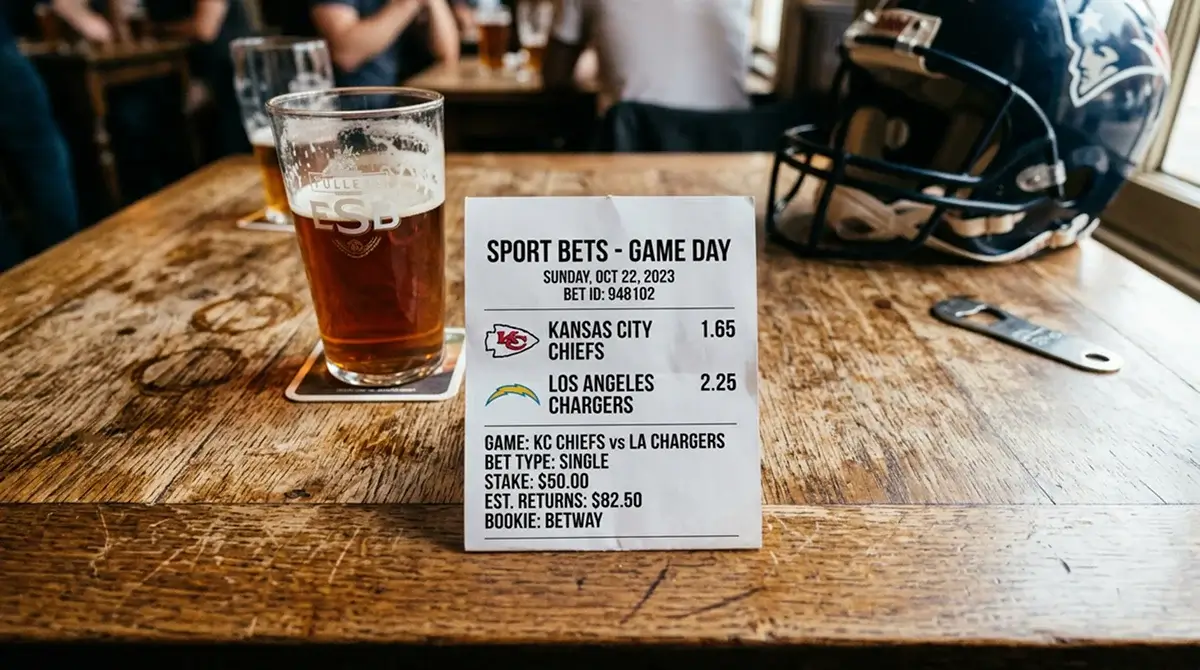
A typical NFL total on a UK platform looks like this: Over 44.5 at 10/11, Under 44.5 at 10/11. The 10/11 price on both sides is the standard vig — the sportsbook’s margin. Stake 11 pounds to win 10 in profit, plus your 11-pound stake back, for a total return of 21 pounds. The implied probability at 10/11 is approximately 52.4%, which means the sportsbook is pricing both outcomes at slightly above 50% to build in their edge. When you see the over at 5/6 and the under at evens, the sportsbook is expressing a lean toward the under: they are offering a better price on the outcome they consider less likely, or more precisely, they are adjusting for the weight of over money from the public.
Some UK sportsbooks offer whole-number totals — 44 instead of 44.5 — which introduces the push scenario. If the combined score lands on exactly 44, your bet is voided and your stake returned. In an accumulator, the push leg is removed and the acca recalculates with one fewer selection. Whole-number totals are less common in the NFL than in football, but they appear on certain platforms and in certain market conditions, particularly when the sportsbook wants to keep the number on a psychologically significant level rather than moving through it.
Alternative totals deserve attention. Beyond the main line, most UK sportsbooks offer a range of alternative numbers at adjusted prices. If the main total is 44.5 at 10/11 each way, you might find Over 40.5 at 4/9 or Under 48.5 at 4/9. These alternative lines let you buy confidence at a cost (lower total for the over, higher total for the under) or sell confidence for value (higher total for the over, lower total for the under). I use alternative totals primarily in strong-conviction spots where I believe the main line is off by 3 or more points — taking the over at a lower number with shorter odds reduces my risk while maintaining a positive expected-value position. With 76% of 18-to-24 UK bettors wagering on their phones, the sportsbook apps have made alternative totals accessible with a single tap, which is a significant improvement over a few seasons ago when you had to dig through secondary menus to find them.
Over/Under Strategies That Hold Up Across Full Seasons
Most totals “systems” you will find online are back-tested nonsense. “Take the under when both teams allow fewer than 20 points per game” sounds logical until you realise that the sportsbook already accounts for defensive quality in its model. The strategies that hold up are the ones that exploit structural market biases rather than statistical coincidences.
The over bias is the most documented structural bias in NFL totals betting. Recreational bettors overwhelmingly prefer overs. Rooting for points is more exciting than rooting for punts, and the psychology of “something happening” outweighs the psychology of “nothing happening” in how people experience a bet. This persistent public preference means that sportsbooks shade totals slightly higher than their models suggest, building in a small premium on the over to balance their books. The result, over large samples, is a modest edge on unders. I do not blindly bet unders — the edge is too thin for that — but when my analysis points to the under and the line has not moved down from the opening number, I have additional confidence that the market has not fully priced in the scoring environment.
The late-season under trend is one I have tracked personally across five consecutive NFL seasons. From Week 13 onward, colder weather, accumulated injuries, and conservative play-calling by teams locked into playoff positions or out of contention combine to suppress scoring. Totals in December and January games consistently lean under relative to early-season games, yet sportsbook models weight recent scoring data, which is influenced by the warmer, higher-scoring September and October environment. The adjustment lag creates a window where the total reflects a scoring pace that the late-season conditions will not sustain.
Divisional game unders are another pattern worth monitoring. Teams within the same division play each other twice per season, and the second meeting — typically later in the year — benefits from familiarity. Defensive coordinators have seen the opposing offence’s tendencies in the first meeting and adjust accordingly. This familiarity effect is not captured by aggregate efficiency metrics, which treat all opponents equally. The second divisional matchup tends to produce tighter, lower-scoring games than the first, and the total does not always reflect this.
First-Half and Quarter Totals: Smaller Markets, Wider Edges
The full-game total gets most of the attention and most of the volume. That is precisely why I have shifted an increasing share of my totals betting to first-half and quarter lines over the past three seasons. Smaller markets mean less sharp money, less model refinement from the sportsbook, and wider pricing inefficiencies.
First-half totals are derived from the full-game total but do not simply divide it in half. NFL scoring is not evenly distributed across the four quarters. First halves tend to produce slightly more points than second halves in competitive games, because coaching staffs become more conservative with leads and trailing teams have not yet shifted into desperation mode. In blowouts, the pattern reverses: second halves produce more scoring because the trailing team abandons its game plan and the winning team’s backups enter. The sportsbook’s first-half total accounts for this distribution, but the adjustment is imprecise, particularly for specific matchup types.
Where I find the most consistent edge is in first-half unders for games featuring two run-heavy teams or two strong defences. These matchups tend to start slowly as both sides establish the run and feel out the opponent’s defensive scheme. The first-half total, which is typically set at 21 to 23 points for a standard game, often does not drop far enough for these low-pace matchups. Bill Miller, the AGA’s president, once described legal sports betting as something that enhances the fun and competition of NFL games — and there is a particular satisfaction in watching a defensive slugfest unfold exactly as your analysis predicted while the scoreboard crawls upward at a pace that rewards your under position.
Quarter totals are the deepest edge I have found in NFL betting. First-quarter totals are typically set between 9.5 and 11.5 points, and the under has been a long-term winner because opening drives are the most conservative phase of most NFL game plans. Teams script their first 15 plays to establish rhythm rather than score quickly, and defences are freshest in the first quarter. The first-quarter under is not a system you can follow blindly — the edge is narrow and the variance is high on a per-bet basis — but it is a structural tendency rooted in how NFL games are played, not in historical coincidence. The US sports handle of $165.58 billion in 2025, with a hold rate of 10.15%, tells you the sportsbooks are extremely good at pricing full-game markets. Quarter markets attract less modelling attention. That is where the gaps live.
When Totals and Spreads Collide: Building a Complete Game Thesis
The best NFL bets I place each season are not isolated spread or totals positions. They are complete game theses — a coherent view of how the game will unfold that generates a position on both the spread and the total, with each reinforcing the other.
See also: dive deeper into totals markets with our NFL over/under totals breakdown.
Here is what I mean. Suppose my analysis says Team A will dominate the running game, control the clock, and win by 10 points. That game thesis implies two things simultaneously: Team A covers a spread of -7, and the total stays under because clock-controlling run games reduce overall possessions and suppress scoring. If I back Team A on the spread, I should also consider the under. The two bets are correlated through my game thesis, and the correlation means they are not separate risks — they are expressions of the same view through different markets.
The reverse example: I believe a game will be a high-scoring shootout with both offences moving the ball effectively but neither defence able to stop the other. The total should go over, and the spread becomes secondary because when both teams are scoring freely, the margin between them depends on who has the ball last — which is essentially random. In this scenario, I take the over on the total and skip the spread entirely, because my thesis gives me confidence in the scoring environment but no confidence in the winner.
Not every game produces a coherent thesis. Some weeks, my analysis points to a team covering the spread through defensive dominance, which implies the under — but the total has already moved low enough that the under is priced correctly. In those cases, I take the spread alone. Other weeks, the total looks mispriced but the spread is a coin flip. I take the total alone. The discipline is in matching your bets to your thesis rather than forcing positions where your analysis does not support them. For a detailed look at how expected value calculations underpin every position you take, the strategies guide breaks down the maths that connects your thesis to your bet slip.
The practical advantage of thesis-based betting for UK punters is that it reduces the number of bets you place. Instead of scattering five or six positions across a Sunday slate, you identify two or three games where your thesis is strongest and take one or two positions in each. Fewer bets, higher conviction, lower exposure to the sportsbook’s margin. The Kansas City Chiefs may be the most searched NFL team in the UK at 9.5% of search volume, but that popularity does not make their games the best betting opportunities each week. The best opportunities are the games where your thesis aligns with a mispriced market — and that alignment is rarer and more valuable than any favourite-underdog opinion.
NFL Over/Under Betting FAQ
Does overtime count for NFL over/under bets?
Yes. On all major UK sportsbooks, overtime scoring counts toward the final total for settlement purposes. A game that goes to overtime will often push a total over the line that would have landed under in regulation. Check your sportsbook’s terms, but the standard across the industry is to include overtime.
What is a typical NFL game total in 2026?
NFL totals in the 2025-2026 seasons have generally ranged from 37 to 54 points, with the median around 44 to 46. Indoor games and matchups between high-powered offences sit at the top of that range, while outdoor late-season games between defensive teams sit at the bottom.
Are overs or unders more profitable long term?
Over large historical samples, unders have shown a slight edge because recreational bettors systematically prefer overs, causing sportsbooks to shade the total slightly higher. The edge is small — roughly 1 to 2 percentage points — and should not be treated as a blanket system. Situational analysis always outperforms a blind directional bias.
Can I combine a total with a spread in an accumulator?
Yes, and many UK sportsbooks allow you to combine a total and spread from the same game in the same accumulator. Be aware that these legs are often correlated — a blowout favourite covering the spread may also push the total over — and the sportsbook may adjust the combined odds to account for this correlation.
Created by the ”American Football Betting” editorial team.