NFL Closing Line Value: The One Metric That Tells You Whether You Are Actually Winning
 Available in US
What Closing Line Value Is and Why It Matters More Than Your Win Rate
I had a season in 2021 where I went 54% against the spread over 200 bets and felt brilliant. The following season I went 51% and felt like a failure. Then I started tracking closing line value — and discovered that the 51% season was actually more skilful than the 54% one. The first season featured lucky variance on the right side of tight margins. The second featured better prices on bets that just barely missed. CLV told the real story that win-loss records could not.
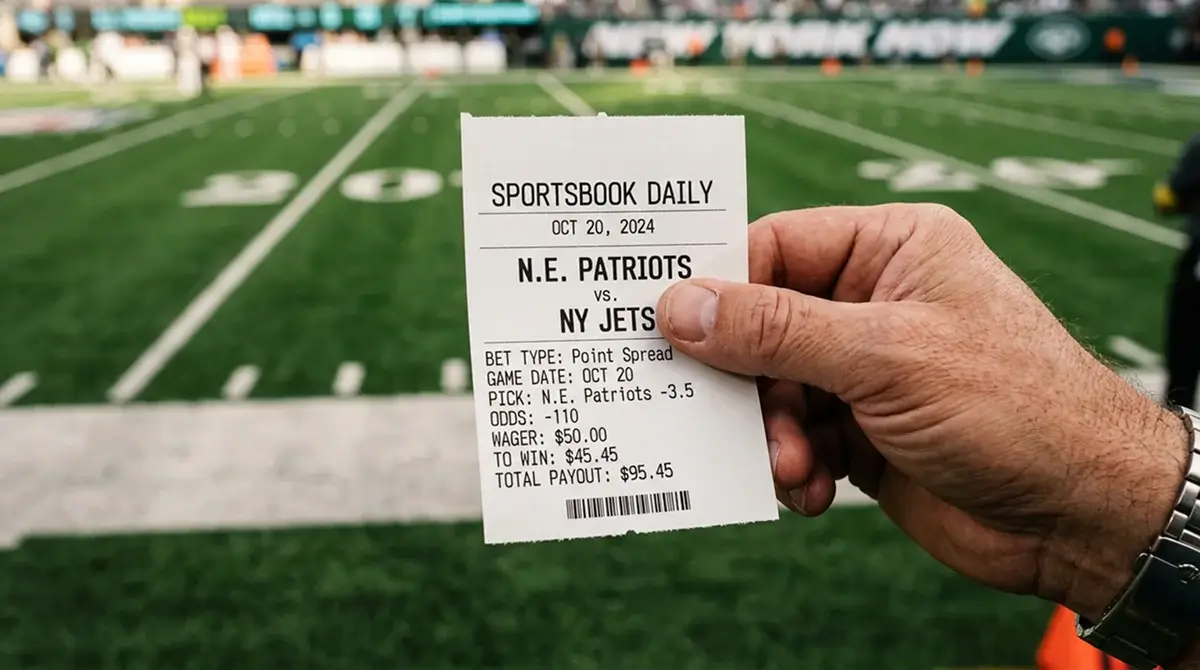
Closing line value measures whether the odds you locked in were better than the odds available at kick-off. If you bet a team at +3.5 on Tuesday and the line closes at +2.5 on Sunday, you captured a full point of CLV — you got a better price than the market’s final, most informed assessment of the game. If you bet at +3.5 and the line closes at +4.5, you lost a point of CLV — you paid more than the market ultimately thought the bet was worth.
CLV is the gold standard of betting evaluation because the closing line is the most efficient point in the market’s life cycle. By kick-off, sharp money, injury news, weather reports, and public action have all been absorbed into the number. The closing line represents the collective intelligence of every bettor and every piece of information available. Beating that number consistently means you are making decisions that are smarter than the final market — and that is the definition of edge.
How to Calculate CLV on Your NFL Bets
My CLV tracking started with a simple spreadsheet column that I now consider more important than the win/loss column. The calculation is straightforward, and every UK punter serious about long-term profit should adopt it.
For spread bets: record the spread at which you placed your bet and the closing spread at kick-off. If you backed a team at +3.5 and the line closed at +3, your CLV is +0.5 points. If you backed them at -7 and the line closed at -6.5, your CLV is -0.5 points (you gave up half a point more than the closing market thought was fair). Over a sample of a hundred bets, calculate your average CLV. A positive average — even +0.3 points — indicates genuine skill.
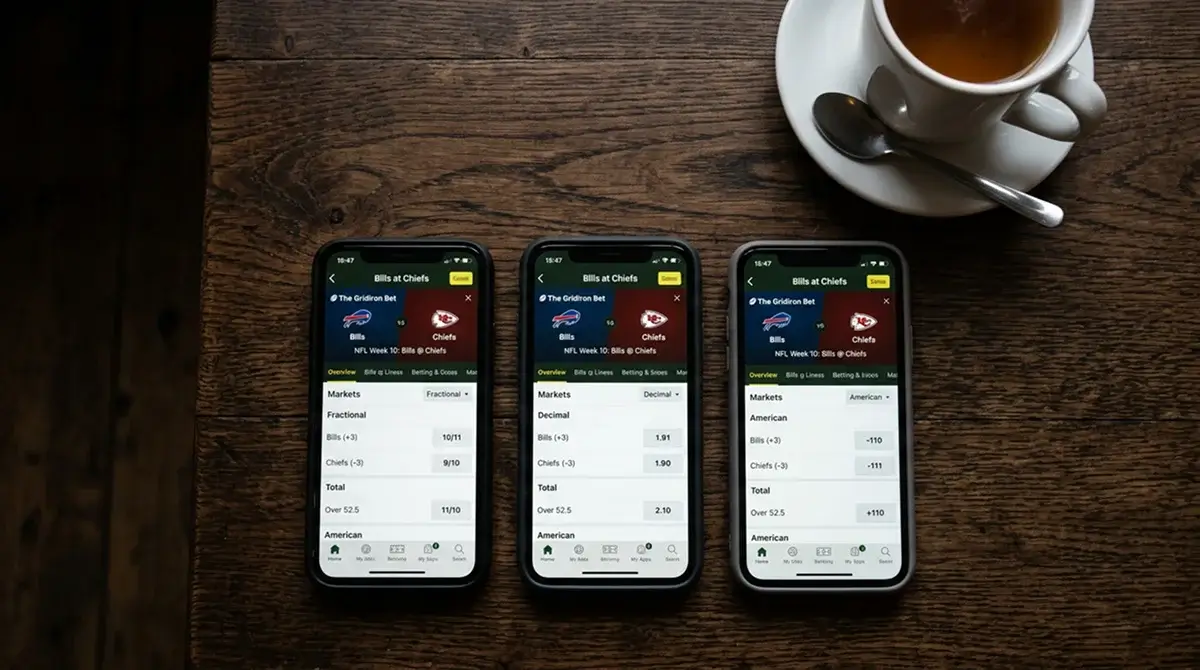
For moneyline and totals bets, express CLV in implied probability. If you bet an over at 1.90 (implied probability 52.6%) and the line closed at 1.83 (implied probability 54.6%), you captured 2 percentage points of closing line value. The market moved toward your position, confirming that you identified value before the majority of bettors did.
The total regulated US sports betting handle reached $165.58 billion in 2025 with operators holding 10.15%. Within that volume, the bettors who consistently beat the closing line are the ones sportsbooks monitor, limit, and — in industry terminology — “respect.” CLV is not just an academic metric. It is the metric that the sharpest operators in the world use to evaluate bettors. If they trust it, so should you.
Why CLV Predicts Long-Term Profit Better Than Win Rate
A friend who is new to NFL betting asked me last season why he should care about CLV when his win rate tells him whether he is making money. The answer is sample size. Over fifty bets, a 56% win rate could easily be luck. Over fifty bets, a +0.5 average CLV is almost certainly skill.
Win rate is a lagging indicator with enormous variance. A bettor who goes 28-22 (56%) over fifty bets might have been on the right side of three or four coin-flip games that could have gone either way. The same bettor could go 23-27 (46%) over the next fifty with no change in approach. CLV smooths out the variance because it measures the quality of your entry point on every single bet, win or lose.
Think of it this way: if you consistently buy at better prices than the closing market, the maths will eventually reward you. You might have a losing week, a losing month, even a losing quarter-season. But over hundreds of bets, getting better prices than the final line translates to profit with mathematical certainty — assuming you are not being penalised by overround, which requires shopping for the best available odds. CLV and line shopping are two sides of the same coin, and serious NFL bettors pursue both relentlessly.
When to Place Your NFL Bets for Maximum CLV
Timing is the most actionable lever you have for improving CLV. I analysed three years of my own betting timestamps against closing lines and found that my CLV was significantly higher on bets placed Sunday through Tuesday than on bets placed Thursday through Saturday.
The reason is structural. NFL lines open on Sunday evening after the previous week’s games conclude. The opening lines reflect the sportsbook’s initial assessment, which is informed but imperfect. Over the next five days, sharp bettors, injury reports, weather forecasts, and public money reshape the line toward its final, most efficient form. If you place your bet early in the week — when the market is still processing new information — you have the best chance of capturing a price that the closing line will move past.
The catch is that early-week betting requires you to make decisions before all the information is available. You might bet a team at -3 on Monday and then learn on Thursday that their starting running back is doubtful. If the line moves to -2 after the injury news, your CLV is negative. The discipline is to bet early only on games where your edge is based on factors that are already known — power rating disagreements, schedule advantages, matchup analysis — and wait until closer to kick-off for games where injury or weather uncertainty is high.
The NFL season’s legal handle approaches $30 billion, and the sharpest portion of that money moves early in the week. By Thursday, the line has already absorbed the most informed opinions. By Saturday, the public arrives and pushes the number in predictable directions. Getting your bets placed in the early-week window puts you in the same temporal space as the sharp money, which is exactly where you want to be.
Building a CLV Habit That Lasts All Season
The hardest part of CLV tracking is consistency. It takes thirty seconds per bet to record your entry price and the closing line, but across a season of two hundred bets, that time adds up — and it is tempting to skip the tracking on weeks when results are going well. Do not. The weeks when you feel sharpest are exactly the weeks where CLV data confirms or challenges that feeling with precision.
My setup is a spreadsheet with seven columns: date, game, market (spread/total/moneyline), my price, closing price, CLV, and result. Every Sunday night after the final whistle, I spend fifteen minutes updating the closing prices from an odds archive and calculating CLV. The running average updates automatically. When my trailing twenty-bet CLV is positive, I know my process is sound regardless of short-term results. When it drifts negative, I review my recent bets to identify whether I am betting too late, missing line moves, or straying from my analytical framework.
CLV is the difference between betting and gambling. A bettor who tracks CLV is measuring their edge in real time and adjusting when the data demands it. A gambler who tracks only wins and losses is riding variance and hoping the next week will be better. The record-keeping guide covers the full tracking framework, but CLV is the single column that transforms a bet journal from a diary into a performance tool. If you adopt one habit from this site, make it this one.
What is a good average closing line value for NFL betting?
An average CLV of +0.5 to +1.0 points on spread bets indicates genuine skill and is consistent with long-term profitability. Even +0.3 points of average CLV, sustained over a large sample of 150-plus bets, suggests you are making decisions that are better-informed than the closing market. Most recreational bettors have a negative average CLV.
Can I track closing line value if I only bet totals and moneylines?
Yes. For totals, compare your entry line to the closing total and express CLV in points. For moneylines, convert both your entry odds and closing odds to implied probabilities and calculate the difference. A positive difference means you captured value. The principle is the same across all markets: did you get a better price than the final, most efficient line?
Prepared by the American Football Betting editorial staff.