NFL Halftime Betting Strategy: Finding Value When the Game Resets
 Available in US
Why Halftime Markets Are the NFL’s Best-Kept Betting Secret
The bet that changed my approach to NFL wagering was a second-half spread I placed during the 2022 Wild Card round. A team that had trailed by seventeen points at halftime came storming back, and I had taken them at +3.5 for the second half at odds that assumed the first-half blowout would continue. It did not. The second half was essentially a coin flip, and my +3.5 won comfortably. That experience led me down a rabbit hole of halftime data that reshaped my entire in-season workflow.
Halftime betting — placing wagers on second-half outcomes after the first half has concluded — is one of the least efficient markets in NFL sportsbooks. The reason is timing: sportsbooks have roughly fifteen minutes to post second-half lines, and the pricing is heavily influenced by what just happened rather than what is likely to happen next. A team that scored twenty-one first-half points gets priced as if that scoring rate will continue. But NFL scoring reverts sharply toward the mean in the second half, and that reversion is where the value lives.
See also: explore american football betting for all NFL live wagering tips.
How Second-Half Scoring Differs from First-Half Patterns
I tracked every NFL game across the 2023 and 2024 seasons and split the data by half. The results confirmed what I had suspected: second-half scoring is lower, more compressed, and less correlated with first-half scoring than the market implies.
On average, NFL teams score 1.2 fewer points in the second half than in the first half. Part of this is structural — halftime adjustments allow defensive coordinators to scheme against what worked in the first half. Part of it is strategic — teams with leads run the ball more, bleed clock, and trade points for time. And part of it is physical — fatigue accumulates, particularly for defensive players who faced uptempo first-half offences.
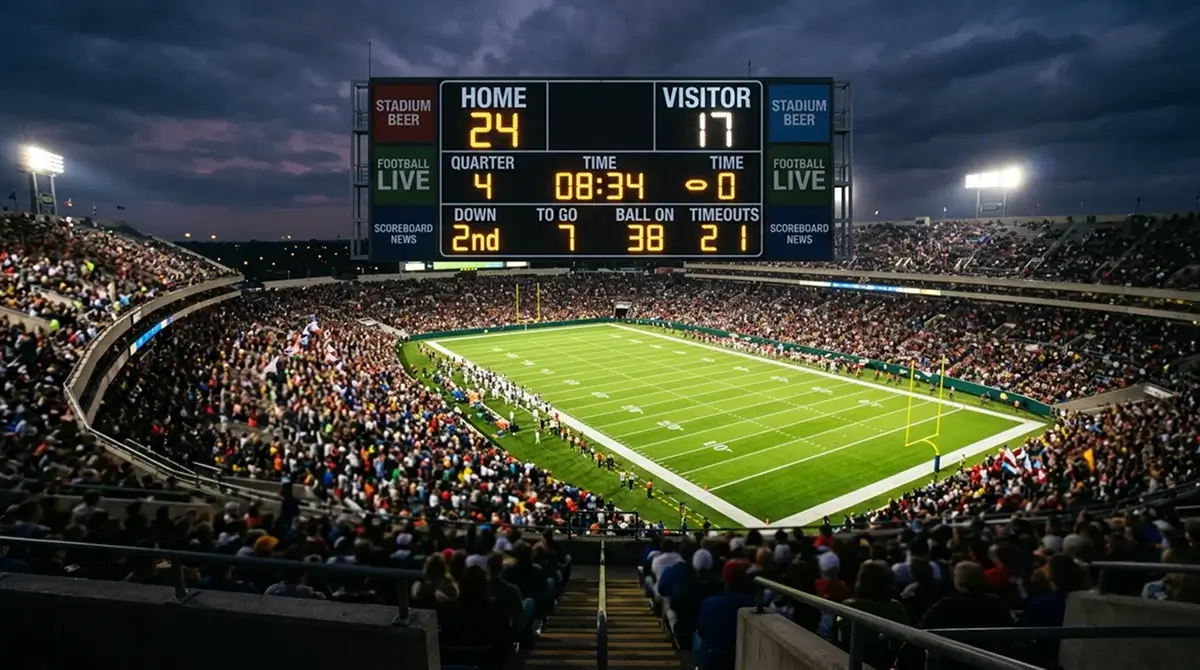
The correlation between first-half and second-half scoring for the same team in the same game is surprisingly weak. A team that puts up twenty-four first-half points has roughly a 30% chance of scoring fewer than ten in the second half. The market, conditioned by the visual memory of a dominant first-half performance, consistently underestimates that drop-off. For totals betting, this means second-half unders carry a structural edge when both teams scored heavily before halftime.
Spread betting tells a different story. Teams trailing at halftime tend to be more aggressive in the second half — abandoning the run, taking more risks on fourth down, using their timeouts strategically. That aggression narrows the scoring gap. Second-half spreads on trailing teams offer value more often than the pre-match market would suggest, particularly when the deficit is between seven and seventeen points — large enough to trigger aggressive play-calling but not so large that the game is truly over.
Reading Halftime Adjustments Before the Market Does
During the 2024 NFL season, I began watching the first half specifically to inform my halftime bets rather than the other way around. The key is identifying what each coaching staff is likely to adjust, then asking whether the halftime line has priced those adjustments in.
Defensive adjustments are the most impactful and the most predictable. If a team gave up three big passing plays in the first half because of a coverage bust, the coordinator will almost certainly fix the alignment. If the opposing running game gashed the defence through a specific gap, expect a front adjustment. These corrections are visible in the first few possessions of the second half and they suppress the offensive production that the halftime line was extrapolating from first-half data.
Offensive adjustments are harder to predict but equally relevant. A team that ran the ball twenty times in the first half and built a lead is unlikely to maintain that volume in the second half if the opponent’s defence stacks the box. The offence will shift toward play-action and quick passing, which changes the scoring profile entirely. The total regulated US sports betting handle hit $165.58 billion in 2025 with operators holding 10.15% — and halftime markets contribute to a higher hold percentage precisely because the rapid turnaround in pricing favours the house. Your job is to identify the spots where that rapid pricing creates gaps.
Practical Halftime Betting Workflow for UK Punters
My halftime betting process is deliberately simple. I watch the first half of one or two selected games — not the entire slate — and make a decision within the first five minutes of halftime. Overthinking during a fifteen-minute window is the enemy of good halftime betting.
See also: discover UK-focused in-play options in our NFL live betting UK article.
Step one: note the first-half score and the pre-match total. If both teams scored heavily and the first-half total exceeded the pre-match total’s implied first-half portion, the second-half under is my default lean. Step two: check whether the trailing team’s deficit sits in the seven-to-seventeen-point range. If so, evaluate whether the second-half spread prices in enough regression. Step three: compare the halftime line to what I would have set based on my own pre-match model plus first-half observation. If the gap is a point or more, I bet. If it is not, I pass.
Stake sizing for halftime bets should be smaller than your standard pre-match wagers. The market is less liquid, the turnaround is fast, and the information advantage — while real — is modest. I allocate no more than 1% of my bankroll per halftime bet, compared to 2-3% for pre-match plays where I have done deeper preparation. The live betting guide covers broader in-play strategy, but halftime markets deserve their own discipline because the fifteen-minute window creates a fundamentally different decision environment from continuous in-play betting.
One angle that has served me well: teams with elite defensive coordinators consistently outperform in the second half. The best defensive minds use halftime to identify offensive tendencies from the first two quarters and scheme specific responses. When I see a top-tier defensive staff going into halftime against an offence that relied on a limited set of plays in the first half, the second-half under on the opposing team’s scoring becomes particularly attractive. The NFL’s legal handle for the 2025 season approached $30 billion, and halftime markets represent a fraction of that volume — which means less sharp money competing for the same edges, and more opportunity for punters who do the work.
Halftime betting rewards the patient, the observant, and the disciplined. It does not reward the punter who bets every halftime of every game because they are bored during the break. Pick your spots, trust the regression data, and let the market’s recency bias work in your favour.
Are second-half totals consistently lower than first-half totals in the NFL?
Yes. NFL teams score an average of 1.2 fewer points in the second half than the first half. This is driven by halftime defensive adjustments, clock management by leading teams, and cumulative fatigue. The market often overestimates second-half scoring when both teams scored heavily before halftime.
How quickly do UK sportsbooks post NFL halftime betting lines?
Most UK sportsbooks post second-half lines within two to five minutes of halftime beginning. The lines are available for roughly ten to twelve minutes before second-half kickoff. Because the pricing window is short, sportsbooks rely heavily on automated models that can overweight first-half trends, creating value for bettors who understand regression patterns.
Prepared by the American Football Betting editorial staff.