NFL Quarterback Matchups Betting: How the Most Important Position Moves the Line
 Available in US
The Quarterback Is the Spread
When I started modelling NFL games, I built elaborate systems accounting for rushing defence, red-zone efficiency, turnover differential, and a dozen other variables. Then a sharp bettor I respected told me something that sounded absurdly reductive: “Just compare the quarterbacks and you will be right 60% of the time.” I was sceptical. Then I tested it. He was not far off.
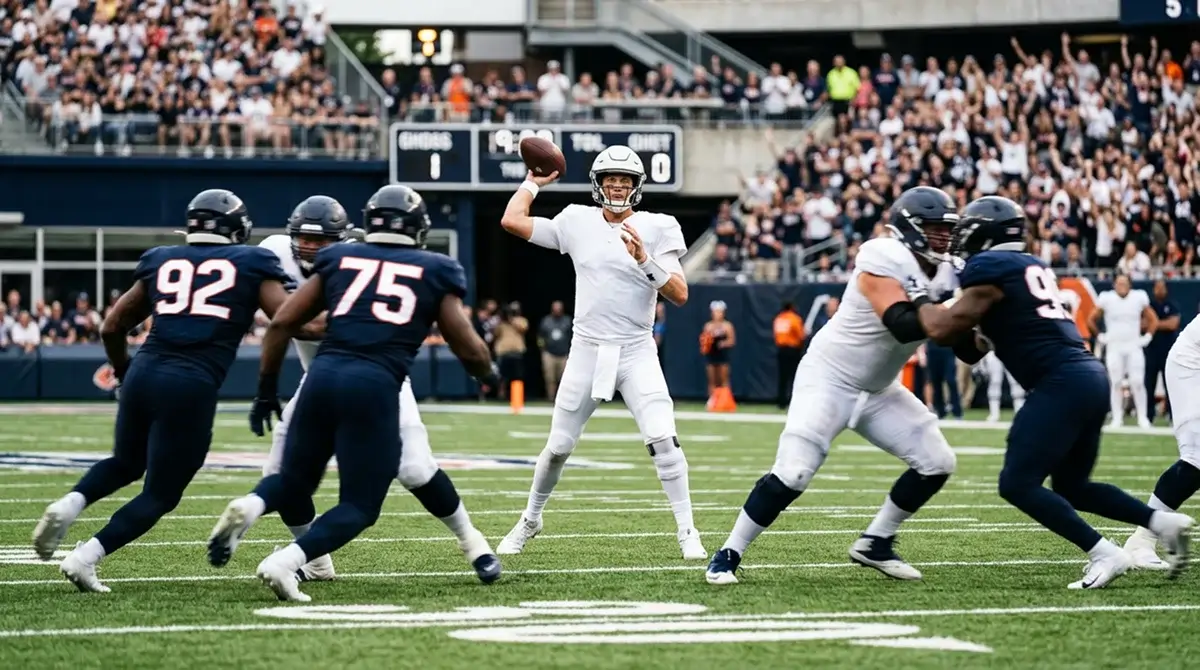
The quarterback position in American football exerts more influence on game outcomes than any single position in any major team sport. An elite quarterback transforms a mediocre roster into a playoff contender. A poor quarterback drags a talented roster into irrelevance. This is not opinion — it is reflected in the betting market itself. When a starting quarterback is ruled out, the line moves 3 to 7 points depending on the quality gap between the starter and the backup. No other single-player absence in any sport moves a spread that dramatically.
For UK bettors, understanding quarterback quality and matchup dynamics is the fastest path to informed NFL betting. You do not need to master every nuance of the game. You need to know which quarterbacks elevate their teams, which ones limit them, and how the specific defensive scheme they face on a given Sunday affects their performance.
See also: return to american football betting for all NFL betting guides.
Reading Quarterback-Defence Matchups for Spread Value
Not all defences are equally difficult for all quarterbacks. I started tracking quarterback performance splits against different defensive archetypes in 2021, and the patterns were clear enough to bet on.
Quarterbacks who thrive in the pocket but lack mobility struggle against defences that generate pressure with four rushers — the so-called four-man rush. When a defence can collapse the pocket without blitzing, the offence has no numbers advantage in the passing game, and a statue quarterback has nowhere to escape. Conversely, mobile quarterbacks often excel against heavy blitz schemes because their ability to scramble punishes the vacated rushing lanes and turns designed pass plays into improvised runs.
Deep-passing quarterbacks face a specific challenge against two-high safety defences that limit downfield opportunities. A quarterback whose value comes from explosive 30- and 40-yard completions will see those opportunities vanish against a scheme designed to protect the deep middle of the field. The adjustment forces the offence into shorter, more patient drives that consume clock and produce fewer points — directly affecting both spread and total markets.
The NFL season’s legal handle reaches approximately $30 billion, and a disproportionate share of that money is bet based on quarterback narratives — “This quarterback is elite, back them” — without examining the specific defensive matchup. That surface-level approach creates pricing inefficiencies for bettors who go one level deeper.
Backup Quarterback Situations: Where the Market Overreacts
I keep a running list of backup quarterback ratings and scheme fits for all thirty-two teams, updated every Tuesday. The reason is simple: the market consistently overreacts to quarterback injuries, and the first few hours after a starter is ruled out are the most profitable window of the entire NFL week.
When a starting quarterback is announced as out on a Wednesday or Thursday, the line moves immediately — and it almost always moves too far. The sportsbook knows the public will hammer the opposing side, so it proactively adjusts the spread by 4 to 7 points. But not all backups are created equal. Some are experienced veterans with starting experience. Some are system-specific fits who can execute the existing scheme effectively. Others are genuinely poor replacements who justify the full adjustment.
The edge comes from knowing the backup. If a team’s backup is a competent veteran and the line has moved 6 points, the market has overcorrected. If the backup is a raw developmental player, the 6-point move may be appropriate or even insufficient. Over the past three seasons, my records show that backing teams with competent backups after a line overcorrection has been my single most profitable repeating angle — a 62% win rate against the spread on a sample of thirty-four bets.
Quarterback Rushing and Its Effect on Prop Markets
Dual-threat quarterbacks have reshaped both the game and the betting market. Player prop volume on quarterback rushing yards and anytime touchdown scorer markets has surged — at some sportsbooks, individual player prop wagers now outnumber point spread bets. Quarterbacks who run the ball present a unique pricing challenge because their rushing production is volatile and partially dependent on game script.
A mobile quarterback facing a defence that struggles to contain scrambling passers is a strong anytime touchdown scorer candidate at prices the market often underestimates. The public still associates touchdowns with running backs and wide receivers, which means quarterback touchdown scorer odds are sometimes longer than the data justifies. Four to eight rushing touchdowns per season is a normal range for a dual-threat starter, and in games where the matchup favours scrambling, the single-game probability of a rushing touchdown can exceed 30% — a figure that translates to value at prices of 5/2 or longer.
For passing props, the defensive matchup matters enormously. A quarterback’s passing yards projection against a top-five pass defence should look nothing like his projection against a bottom-five pass defence, yet sportsbooks sometimes anchor too heavily to season averages. When the mismatch is extreme — an elite passer against a decimated secondary, or a limited passer against an elite coverage unit — the prop line is most likely to be mispriced. The odds format guide covers how to convert those prop prices into implied probabilities for accurate comparison across sportsbooks.
See also: see how marquee fixtures affect odds in our NFL primetime games betting guide.
Quarterbacks in the Wind: Environment and Arm Talent
My personal worst bet of the 2024 season was a passing yards over in a December game where sustained winds exceeded 25 miles per hour. The quarterback was a strong-armed passer who relied on deep shots — exactly the type of throw most disrupted by wind. I ignored the weather, backed the over, and watched every deep pass sail wide or fall short. Wind exposure correlates directly with arm talent type, and the market often treats all quarterbacks identically in adverse conditions.
Quarterbacks with compact, quick-release throwing motions handle wind and cold better than quarterbacks with elongated windups and high release points. Short-area passers who work the middle of the field are less affected by crosswinds than deep-ball specialists who need touch and trajectory. In late-season outdoor games with adverse conditions, the passing environment is part of the matchup — not a footnote. Checking the weather forecast is a thirty-second habit that has saved me from multiple losing bets per season, and the adjustment it requires is straightforward: lower the passing total, favour the running game, and avoid deep-ball prop overs in winds above 20 miles per hour.
How much does a quarterback injury move the NFL spread?
A starting quarterback injury typically moves the spread by 3 to 7 points, depending on the quality gap between the starter and backup. Elite quarterbacks carry the largest adjustment — losing a top-five passer can shift the line by 6 or 7 points. The market often overreacts in the first few hours after the announcement, creating value on the side with the backup if the replacement is competent.
Should I bet on quarterback rushing props in the NFL?
Quarterback rushing props offer value for dual-threat passers, particularly in matchups against defences that struggle to contain mobile quarterbacks. Anytime touchdown scorer odds for rushing quarterbacks are frequently longer than the data supports, because the market underweights quarterback rushing touchdowns relative to running backs and receivers. Focus on game-specific matchups rather than season averages.
Prepared by the American Football Betting editorial staff.