NFL Live Betting in the UK: In-Play Markets, Timing, and When to Strike
 Available in US
Why In-Play NFL Betting Rewards Patience Over Impulse
I placed my worst-ever NFL bet at halftime of a 2020 Monday Night Football game. A team was down 17-0 and I hammered the live moneyline at 6/1, certain a comeback was brewing. They lost 34-3. That night taught me something no spreadsheet could — live betting punishes impulse and rewards the punters who wait for the market to misprice a genuine turning point.
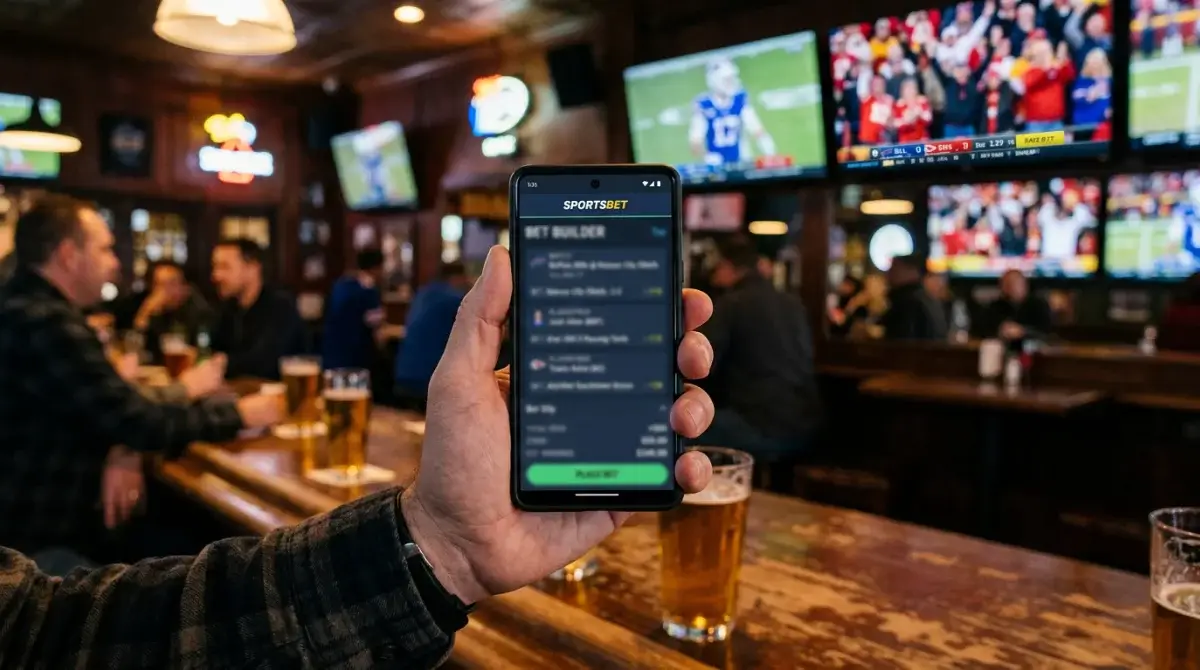
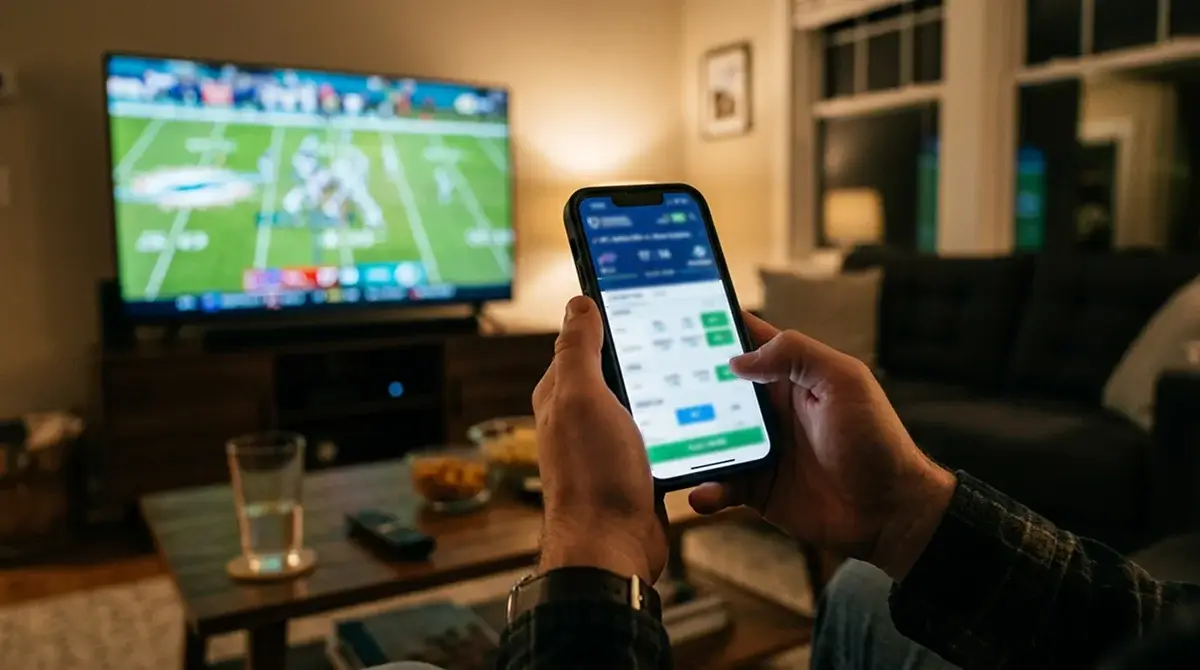
In-play betting on the NFL has grown faster than any other market segment in the UK. The global American football betting market reached $8.52 billion in 2025, growing at 11.5% annually, and a significant portion of that growth comes from live wagers placed after kickoff. The appeal is obvious: instead of locking in a position hours before the game, you watch the action unfold and react to what you see. But reacting and reacting well are two different things entirely.
NFL games last roughly three hours and contain around 130 individual plays. Each play generates new information — a quarterback sacked, a penalty flag thrown, a receiver limping off the field — and each piece of information shifts the probabilities. The sportsbook’s algorithm processes these shifts in seconds. Your edge does not come from being faster than the algorithm. It comes from understanding context the algorithm underweights: momentum, coaching tendencies, and situational football.
See also: head to american football betting for comprehensive NFL resources.
How NFL In-Play Odds Move and What Drives the Shifts
During a playoff game in January 2024, I watched a live spread swing from -3.5 to +2.5 in under four minutes. A fumble, a quick touchdown, and suddenly the sportsbook’s model had flipped the expected winner. That six-point swing represented real money flowing through the market — and real opportunity for anyone paying closer attention than the algorithm.
NFL live odds are driven primarily by three factors: the current score, time remaining, and field position. A seven-point deficit in the first quarter barely moves the needle because the trailing team has three full quarters to recover. The same seven-point deficit with four minutes left in the fourth quarter is nearly insurmountable — the live moneyline for the trailing team might stretch beyond 10/1.
What the models handle less precisely is situational context. A team trailing by seven at halftime after dominating time of possession and losing to two fluky turnovers is in a fundamentally different position from a team trailing by seven after being outplayed in every phase. The score is identical; the underlying performance is not. The live line treats both scenarios similarly because it weights the scoreboard heavily. Your job is to identify when the scoreboard is lying.
Turnovers create the largest and most exploitable live odds movements. A fumble inside the red zone can swing the live spread by three to five points in seconds. If that fumble was genuinely fluky — a wet ball, a freak strip — rather than the result of systemic ball-security issues, the post-turnover odds overreact. I have found consistent value in backing the team that lost a turnover immediately after the swing, provided the turnover was isolated rather than part of a pattern.
The Best In-Play Markets for UK NFL Bettors
Not every live market is worth your attention. I have spent seasons testing different in-play approaches, and three markets consistently offer the best combination of liquidity, pricing efficiency, and analytical tractability.
Live point spreads are the bread and butter. The spread adjusts continuously during the game, and the pricing is tightest here because it attracts the most volume. The margin on a live spread is typically 5-7%, compared to 8-12% on more exotic live markets. When you spot a discrepancy between the live spread and your own assessment of true win probability, the spread is where you express that view most efficiently.
Next-score markets — which team scores next, or what type of score comes next (touchdown, field goal, safety) — offer a different angle. These markets reset after every scoring play, giving you multiple entry points per game. The pricing is less efficient than live spreads because the sportsbook is modelling a narrower event with more variables. If you have a strong read on which team is controlling field position and tempo, next-score markets translate that read into a bet more directly than a full-game spread.
Live totals — the over/under on remaining points — are underrated. The sportsbook sets a new total based on the current score and expected scoring rate for the remainder of the game. In weather-affected games, where wind or rain suppresses scoring more than the pre-game total anticipated, the live total can remain too high well into the second half because the model adjusts slowly to environmental factors. I have found consistent value on live unders in games where conditions deteriorated after kickoff.
Timing Your Bets: Commercial Breaks and Momentum Shifts
Here is a practical edge that most UK punters overlook entirely. NFL broadcasts include mandatory commercial breaks — two-minute timeouts at predetermined points in each quarter. During these breaks, the live betting interface stays open, but the flow of new information pauses. The odds displayed during a commercial break reflect the last play before the break, not the tactical adjustments coaches are making in the huddle.
I use commercial breaks as decision windows. While the clock is stopped and the broadcast is selling insurance, I review my in-game notes: which team is winning the play-count battle, how the defensive schemes are adjusting, whether either offence has changed its tempo. If my halftime assessment differs meaningfully from the live line, the commercial break is when I place the bet — the market is momentarily static, and I have had a few uninterrupted minutes to think rather than react.
The other prime timing window is the transition between the third and fourth quarters. By this point, roughly 75% of the game has been played and the sample size of in-game data is large enough to support genuine conclusions. But the fourth quarter introduces game-script distortions: trailing teams abandon the run, leading teams burn clock, and defensive schemes shift to prevent big plays. These script changes alter scoring rates in predictable ways that the live model sometimes lags behind. A team leading by ten entering the fourth quarter is more likely to grind clock than extend the lead — which means the live total is often slightly too high at the start of the fourth.
Managing Your In-Play Bankroll Without Chasing
Live betting is where bankrolls go to die if discipline breaks down. The speed of the market, the emotional intensity of watching a game with money on it, and the constant availability of new bets create a perfect storm for overtrading. I have a rule that saved my bankroll more than any analytical insight: I set a hard cap of three live bets per game, decided before kickoff.
See also: broaden your in-play knowledge with our NFL live betting guide.
Three bets forces prioritisation. You cannot bet every turnover swing, every scoring play, every momentum shift. You have to wait for the situations where your edge is clearest and the price is most dislocated. Most games, I use one or two of my three slots. Some games, I use none — the live line tracks reality closely enough that no exploitable gap appears. Sitting out a game you are watching live requires discipline, but bankroll management is the foundation that makes everything else sustainable.
The total regulated US sports betting handle reached $165.58 billion in 2025 with operators holding 10.15% of all wagers — and the hold rate on live betting is higher than on pre-match markets because punters trade emotionally. Do not be that punter. Set your cap, pick your spots, and let the game come to you rather than chasing it across sixty minutes of football.
Is NFL live betting available on all UK sportsbooks?
Most major UK-licensed sportsbooks offer in-play betting on NFL games during the regular season and playoffs. Market depth varies — primetime and playoff games typically have the widest range of live markets, while early-season or low-profile matchups may offer only live spread, moneyline, and total. Check your sportsbook’s NFL section during a live game to confirm availability.
Do live NFL odds move faster than live Premier League odds?
NFL odds can move more sharply per event because individual plays — turnovers, touchdowns, sacks — carry more weight than a single passage of play in football. However, the stoppages between NFL plays give the sportsbook time to recalibrate, so the movement is episodic rather than continuous. Premier League live odds shift more gradually but with less pause between adjustments.
Can I cash out an NFL live bet before the game ends?
Most UK sportsbooks offer cash-out on live NFL bets, though the availability and pricing depend on the operator and the specific market. The cash-out price includes a margin that typically disadvantages the bettor compared to the theoretical fair value. Placing a separate hedge bet at another sportsbook often yields better value than accepting the cash-out offer.
Written by the editors at American Football Betting.