NFL Moneyline Betting for UK Punters: When Picking the Winner Beats the Spread
 Available in US
The Moneyline Is Simpler Than the Spread — and Sometimes Smarter
My first profitable NFL season came entirely from moneyline bets. No spreads, no totals, no props — just picking winners. I had spent two losing years trying to be clever with spreads and parlays before a more experienced bettor told me something that stuck: “If you cannot pick winners, nothing else matters.” He was right. The moneyline — a straight bet on which team wins the game, regardless of margin — is the most fundamental market in NFL betting, and for UK punters crossing over from football, it is the most intuitive entry point.
Moneyline betting strips away the complexity of the point spread. You do not need to worry about whether a team wins by three or by thirty. You just need the right team to have more points when the clock hits zero. That simplicity makes it the default for new bettors, but it also serves experienced punters in specific situations where the spread introduces unnecessary risk.
The NFL is a league of fine margins. More than 13 million people in Britain follow the NFL, and the 68% who sit in the 18-44 age bracket are exactly the audience that engages with moneyline markets on their mobile apps. But simplicity does not mean easy money. The moneyline carries its own pricing dynamics, its own traps, and its own strategic considerations that reward study just as much as any other market.
See also: head to american football betting for a complete NFL betting hub.
How NFL Moneyline Odds Work in Decimal and Fractional Formats
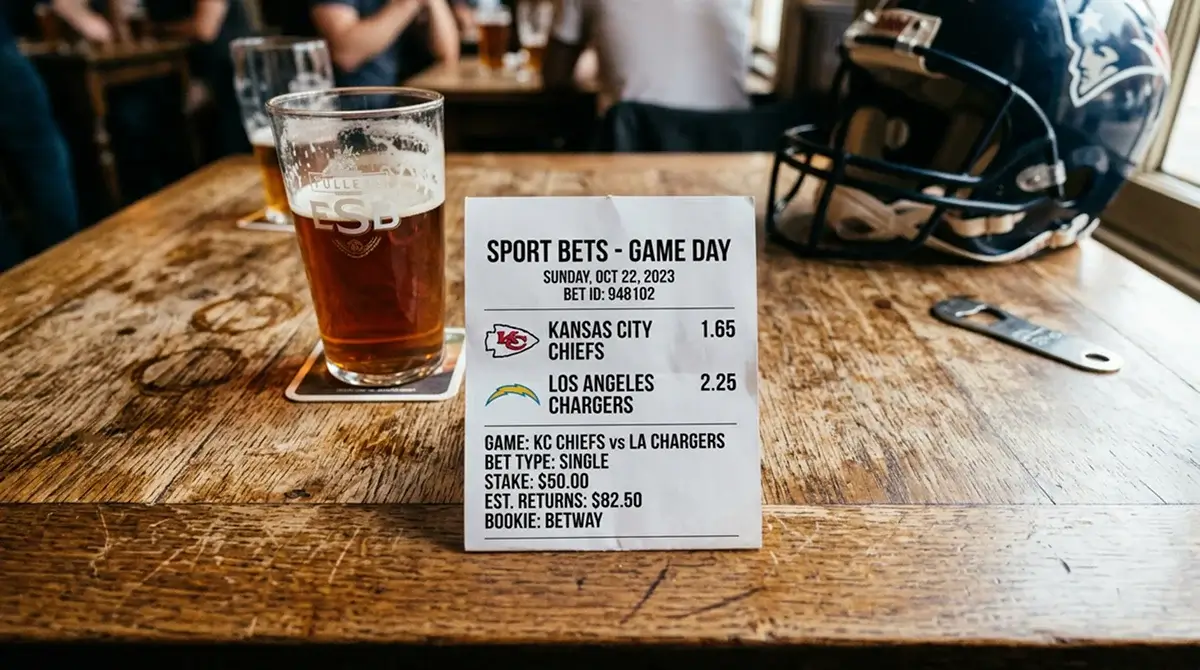
A moneyline bet offers two prices: one for the favourite and one for the underdog. The favourite’s price is shorter — say, 1.45 in decimal — reflecting the higher probability the sportsbook assigns to that team winning. The underdog’s price is longer — perhaps 2.90 — reflecting the lower probability.
In fractional terms, 1.45 decimal converts to roughly 9/20, meaning you stake twenty pounds to win nine pounds profit. The underdog at 2.90 converts to about 19/10 — stake ten, win nineteen. The sum of implied probabilities at these prices is 1/1.45 + 1/2.90 = 68.9% + 34.5% = 103.4%. That 3.4% overshoot is the sportsbook’s overround — the margin built into every moneyline market.
NFL moneyline margins are generally tighter than in football because the market is deep and the competition between sportsbooks is fierce. A typical NFL moneyline overround sits between 3% and 5%, compared to 5-8% on many Premier League match-result markets. That tighter margin means your money goes further per bet, which matters enormously over a full season of wagering.
One quirk UK punters should note: some sportsbooks display NFL moneylines as a three-way market that includes a draw option, particularly on early-season lines posted well before kickoff. NFL games cannot end in a draw during the regular season — overtime rules ensure a winner — so the draw price, when listed, is effectively dead money. Ignore it and focus on the two-way market.
When Moneyline Beats the Spread: Three Scenarios
I keep a running log of every NFL bet I place, and reviewing three seasons of data crystallised the situations where moneyline outperforms spread betting for me personally.
The first scenario is backing heavy underdogs. When a team is getting seven or more points on the spread, the moneyline price stretches to 3.50, 4.00, or longer. If your analysis suggests the underdog has a genuine 30% chance of winning outright — not just covering, but winning — and the sportsbook’s implied probability is 25%, the moneyline offers a larger edge than the spread. Underdogs win outright in roughly 35% of NFL games across a typical season. That baseline rate is high enough to support a moneyline strategy if you can identify which underdogs are undervalued.
The second scenario involves games where you expect a close finish but lack confidence in the exact margin. If two evenly matched teams are separated by a 2.5-point spread and you fancy the favourite, the spread bet requires a three-point win. The moneyline just requires a win. In coin-flip games, the moneyline at 1.80 or 1.85 carries less risk than laying 2.5 points at 1.91, and the price difference is modest enough that the risk reduction justifies the lower potential return.
The third scenario is playoff games. Postseason football produces tighter, lower-scoring contests than the regular season. Spread outcomes become more volatile because late-game strategy shifts — intentional safeties, onside kicks, two-point conversion attempts — can swing the margin by points without changing the winner. In the playoffs, I shift roughly half my spread allocation to moneyline because the winner is more predictable than the margin.
The Moneyline Favourite Trap: Short Prices and Long-Term Losses
Here is the trap that catches more UK punters than any other in NFL moneyline betting: backing heavy favourites at short prices because they “should win.” The 2025 NFL season offered a stark illustration. Several teams that were expected to dominate went through stretches where they lost two or three games to inferior opponents. Every one of those losses wiped out weeks of profit for punters who had been grinding out small returns on 1.25 and 1.30 moneylines.
The maths is unforgiving. At 1.30 (roughly 3/10), you need to win 77% of your bets just to break even. Win rates above 77% on NFL favourites priced below 1.40 are exceptionally rare over any meaningful sample. The total regulated US sports handle hit $165.58 billion in 2025, with operators holding 10.15% — and a significant chunk of that hold comes from casual bettors stacking short-priced favourites into moneyline accumulators.
The antidote is not to avoid favourites entirely but to be selective about price. I set a personal floor: I will not back a moneyline favourite at shorter than 1.55 (roughly 11/20) unless my model gives the team an implied win probability at least five percentage points higher than the sportsbook’s price suggests. Below 1.55, the reward-to-risk ratio is too thin to absorb the inevitable upset losses that every NFL season delivers.
Building a Moneyline Strategy Across a Full NFL Season
A moneyline-focused approach works best as a complement to spread and totals betting, not a replacement. I allocate roughly 25% of my weekly NFL budget to moneyline bets, targeting the three scenarios outlined above. The remaining 75% goes to spread bets and totals where the pricing is tighter and the edge is more measurable.
See also: try alternative spread formats with our NFL handicap betting guide.
Track everything. Record the team, the odds, your estimated true probability, and the outcome. After ten weeks, you will have enough data to evaluate whether your moneyline selections are generating positive ROI or whether the market is pricing those teams correctly. Moneyline betting rewards the same analytical work as any other market — understanding matchups, reading injury reports, evaluating coaching tendencies — but it asks a slightly different question. Not “by how much?” but “who wins?” Sometimes, that simpler question is the one you can answer with the most confidence.
Can NFL games end in a draw and how does that affect moneyline bets?
NFL regular-season games go to overtime if tied after regulation and can theoretically end in a tie if both teams fail to score in overtime, though this is extremely rare. Most UK sportsbooks offer NFL moneyline as a two-way market that does not include a draw option. If a game did end in a tie, sportsbook rules vary — check your operator’s terms for NFL overtime tie provisions.
Is the moneyline or the spread a better bet for NFL beginners?
The moneyline is simpler — you just pick the winner. The spread requires understanding handicaps and margins. For learning the mechanics of NFL betting, moneylines are an excellent starting point. As you develop analytical skills, the spread offers tighter pricing and more consistent edges over time.
Prepared by the American Football Betting editorial staff.