NFL Playoffs Betting Strategy: How Postseason Football Changes the Wagering Equation
 Available in US
- Why Your Regular-Season Approach Needs a Playoff Adjustment
- Lower Totals and Tighter Spreads: The Postseason Numbers
- Home-Field Advantage in the Playoffs: Stronger Than Regular Season
- Coaching Matters More in January: How Preparation Gaps Show Up in Lines
- Prop Bets and Live Betting: Where Playoff Money Gets Soft
Why Your Regular-Season Approach Needs a Playoff Adjustment
January 2023 taught me this lesson the expensive way. I carried my regular-season model straight into the Wild Card round without adjusting a single parameter — same weighting on recent form, same pace metrics, same turnover projections. I went 1-5 against the spread that weekend. The teams I backed were still good teams. The model was still sound for regular-season games. But the playoffs are a different sport disguised in the same uniform, and my model was answering a question the postseason was not asking.
The NFL playoffs compress the best teams into a single-elimination bracket where coaching preparation, matchup-specific adjustments, and star-player performance carry far more weight than they do across a seventeen-game regular season. The margin between winning and losing is thinner, the variance is lower, and the market is harder to beat because the entire betting public is paying attention to fewer games.
Super Bowl LX generated a record $1.76 billion in legal wagers, and the preceding playoff rounds collectively attract billions more. That volume brings sharper pricing on headline markets but also floods niche markets — props, quarter lines, and live betting — with recreational money that creates exploitable inefficiencies.
See also: visit american football betting for essential NFL betting tools.
Lower Totals and Tighter Spreads: The Postseason Numbers
Here is the single most useful data point I carry into every playoff slate: postseason totals average roughly 3-4 points lower than regular-season totals between the same teams. The reason is straightforward — playoff defences are the best in the league, coaching staffs have two weeks to game-plan for a single opponent, and teams play conservatively with elimination on the line.
Spreads compress too. The average regular-season spread is around 3.5 to 4 points, but playoff spreads cluster tighter because the talent gap between qualified teams is smaller. In the Divisional round and beyond, the median spread drops below 3 points. Close games are the norm, not the exception, and moneyline betting gains relative attractiveness because picking the winner becomes more reliable than predicting the margin.
For UK punters accustomed to regular-season patterns, the adjustment is critical. An under that looks aggressive on a regular-season total of 45.5 might be fair value in the playoffs. A spread of -3 that covered comfortably in November might fall short in January against a motivated wild-card team with nothing to lose. Recalibrate your expectations before the first Wild Card kickoff.
Home-Field Advantage in the Playoffs: Stronger Than Regular Season
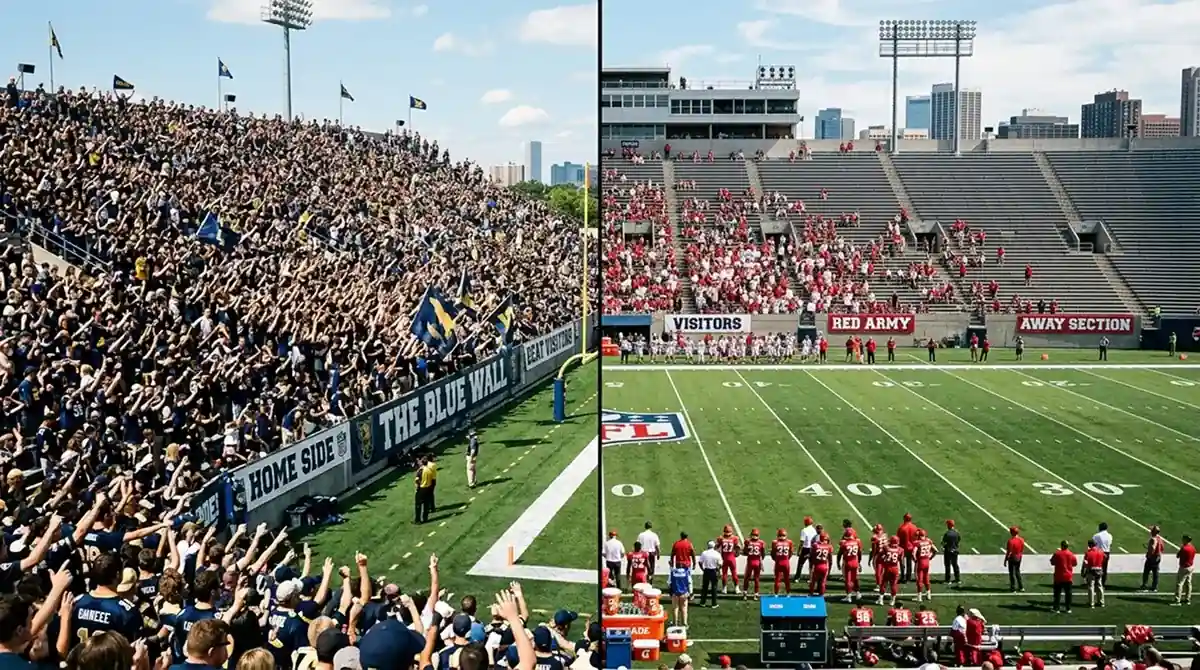
During the regular season, home-field advantage has been declining steadily and now sits at roughly 1.5 to 2 points on the spread. In the playoffs, it expands — particularly in the Divisional round, where higher-seeded teams host lower seeds in front of their most engaged, most passionate crowds.
Playoff home teams have historically won outright at a rate exceeding 65% and covered the spread at approximately 55-57%. The atmosphere in a playoff stadium is qualitatively different from a regular-season crowd. Crowd noise disrupts visiting offences more acutely because the stakes amplify every false start, every delay-of-game penalty, every botched snap count. Sportsbooks price in some of this advantage, but my records suggest they consistently underweight it by 0.5 to 1 point in the Divisional round.
The exception is the Super Bowl itself, which is played at a neutral venue and receives no meaningful home-field adjustment. The Super Bowl crowd is corporate-heavy and geographically mixed, producing an atmosphere that favours neither team. Treat the Super Bowl spread as a true neutral-venue line.
Coaching Matters More in January: How Preparation Gaps Show Up in Lines
Regular-season coaching analysis is useful but limited — every coaching staff juggles seventeen opponents across eighteen weeks. Playoff preparation is an entirely different exercise. A head coach and his staff spend ten to fourteen uninterrupted days building a game plan specifically designed to exploit one opponent’s weaknesses. That level of focus produces tactical adjustments that simply do not appear during the regular season.
Some coaches are measurably better at this than others. Experienced playoff coaches with deep staffs — the ones who have reached multiple conference championships — show a persistent edge in the opening quarter of playoff games, suggesting their preparation produces better opening scripts. First-quarter and first-half markets in games featuring proven playoff coaches are worth a second look, particularly when the sportsbook prices the halftime line as a simple fraction of the full-game spread.
The total regulated US handle of $165.58 billion in 2025 — with operators holding 10.15% — reflects a market where regular-season efficiency is high. The playoffs, paradoxically, offer more exploitable gaps because the dynamics shift and the models trained on regular-season data are slower to adjust than the human analyst who understands what January football actually looks like on the field.
Prop Bets and Live Betting: Where Playoff Money Gets Soft
The sharpest regular-season bettors focus on spreads and totals because that is where the pricing is tightest and the volume is deepest. In the playoffs, the influx of recreational money spills heavily into prop markets and live betting, creating softer lines that disciplined punters can exploit.
See also: understand local matchup dynamics in our NFL divisional rivalry betting article.
Player props in playoff games — particularly touchdown scorers and yardage markets — attract enormous public interest. Casual bettors back star players based on name recognition rather than matchup analysis, which pushes the prices on marquee names below fair value and leaves less-hyped players underpriced. A complementary running back facing a defence that struggles against the run might sit at 5/2 to score anytime while the team’s star receiver, facing a lockdown corner, draws all the public money at 4/7. The running back is the value play; the receiver is the public play.
Live betting during playoff games is where emotional overreaction is most extreme. A team falls behind by ten in the first quarter and the live moneyline stretches to 4/1 or 5/1. But playoff teams are the best in the league — they have the talent and coaching to rally. First-quarter deficits in playoff games are less predictive of the final outcome than the same deficit in a regular-season mismatch. If you follow in-play betting principles, the playoffs amplify both the opportunities and the risks.
How many teams make the NFL playoffs?
Fourteen teams qualify — seven from each conference. The top seed in each conference receives a first-round bye (skips the Wild Card round), while the remaining six play three Wild Card games per conference. The bracket then narrows through the Divisional round, Conference Championships, and the Super Bowl.
Are NFL playoff totals typically lower than regular-season totals?
Yes. Playoff totals average 3-4 points lower than regular-season matchups between comparable teams. The reasons include elite defensive opponents, extended coaching preparation time, conservative play-calling under elimination pressure, and tighter game scripts that suppress scoring.
Does home-field advantage increase in the NFL playoffs?
Historical data shows that home-field advantage is stronger in the playoffs than during the regular season, particularly in the Divisional round. Playoff home teams win outright at a rate above 65% and cover the spread at roughly 55-57%. The Super Bowl is an exception, as it is played at a neutral venue.
Created by the ”American Football Betting” editorial team.