NFL Primetime Games Betting: Why Sunday Night, Monday Night, and Thursday Night Lines Move Differently
 Available in US
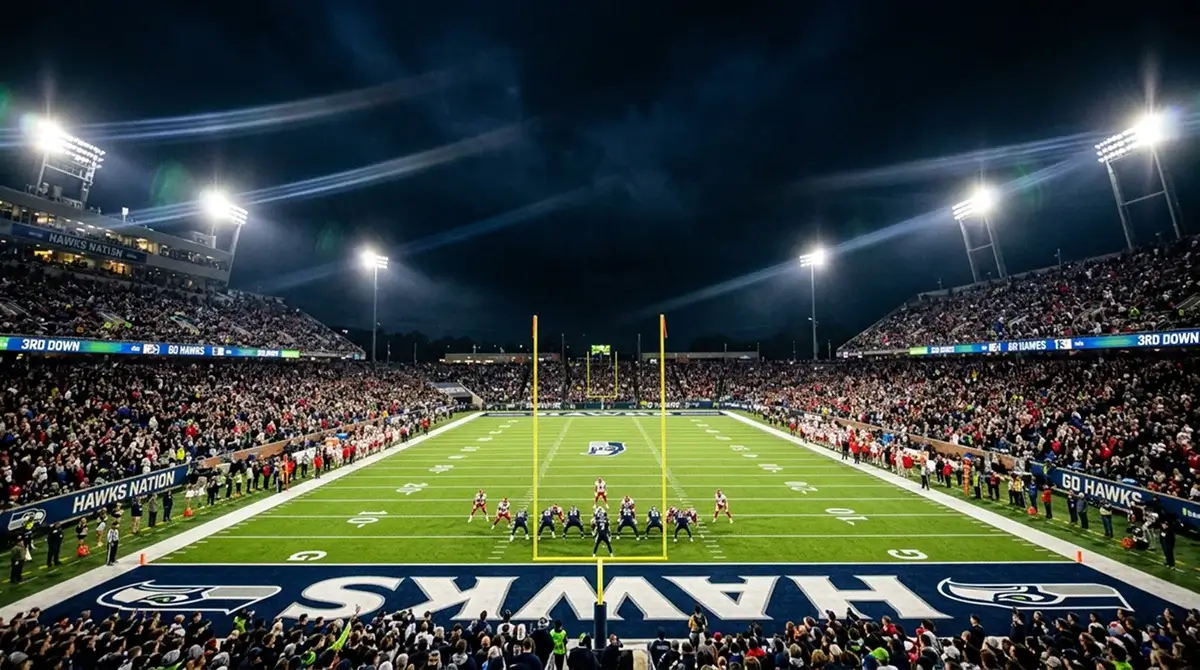
What Makes Primetime NFL Games a Different Betting Beast
I lost four consecutive Thursday Night Football bets in the autumn of 2023 before I sat down and actually examined what I was doing wrong. The answer was embarrassingly simple: I was treating primetime games exactly like the Sunday 1 PM slate, applying the same models, the same assumptions, the same bankroll allocation. Primetime NFL is a different animal, and the betting market treats it that way — whether you realise it or not.
Primetime games — Sunday Night Football, Monday Night Football, and Thursday Night Football — attract a disproportionate share of public betting volume. When there is only one game on the screen, every casual punter in Britain watching at 1:20 AM has an opinion and a bet slip open. That concentration of recreational money creates specific, predictable patterns in how lines move and where value hides. The NFL season generates roughly $30 billion in legal wagers, and a meaningful chunk flows through these marquee slots.
The dynamics shift because sportsbooks know the handle will be massive. They post primetime lines earlier, adjust them more aggressively in response to public action, and often shade the number toward the popular side. If you understand the mechanics, you can position yourself on the right side of those adjustments instead of being the money the sportsbook is fading.
See also: explore american football betting for top NFL betting advice.
Thursday Night Football: Short Weeks and Sluggish Offences
My notebook from 2022 has a circled entry from Week 7: “TNF unders are printing.” That observation held up across the rest of the season and into 2023. Thursday Night Football sits on a short preparation week — teams play on Sunday, then suit up again on Thursday, leaving just three full days to recover, game plan, and travel. The impact on performance is real and measurable.
Offences on short rest tend to be less creative. Coordinators simplify their schemes, lean on established plays, and avoid the exotic formations that require extra practice reps. Scoring output on Thursday nights has consistently trailed the league average by two to three points per team over recent seasons. For totals bettors, that depression in scoring is the signal. The market adjusts totals downward for TNF, but often not enough — particularly early in the season, when sportsbooks are still calibrating.
Spread betting on Thursday nights rewards a different approach too. Road teams on short rest face the worst logistical squeeze in the NFL calendar. Travelling on a Wednesday, sleeping in a hotel room, and playing a physical sport the next evening against a team that slept in their own beds compounds the fatigue factor. I weight short-rest travel disadvantage at roughly 1.5 points beyond the standard home-field adjustment, and my records show that the market underprices this by about half a point on average.
Sunday Night Football: Where the Public Money Floods In
A mate and I used to track Sunday Night Football line movement as a hobby before it became part of my professional routine. The pattern was striking: lines on SNF games move more between Friday afternoon and kick-off than lines on any other time slot, and they move overwhelmingly toward the favourite.
Sunday Night Football is the crown jewel of the NFL broadcast schedule. The league flexes its best matchups into this slot from Week 5 onward, ensuring the audience sees compelling games with playoff implications. That visibility drives enormous recreational handle. Casual punters back favourites, back overs, and back star players — and the sportsbook adjusts the line accordingly. Over 13 million people in Britain follow the NFL, with 68% sitting in the 18-to-44 demographic that is most likely to bet on these showcase games.
The practical implication: if you have a contrarian lean on a Sunday night game — backing the underdog or the under — the optimal time to place your bet is when the line first opens, before the public money arrives. By kick-off, the line has often shifted a full point or more toward the public side. Getting the early number is a small edge, but across a seventeen-week season it compounds.
One exception to the contrarian playbook: when a genuinely elite team faces a struggling opponent in a nationally televised spot, the public side can be the right side. Not every favourite is overpriced. The key is comparing the closing line to your own pre-game assessment rather than reflexively fading the public.
Monday Night Football: The UK Punter’s Late-Night Edge
Monday Night Football kicks off at 1:15 AM or 1:20 AM UK time during the regular season. That timing is brutal for sleep but brilliant for live betting. The American recreational audience is watching in real time, but the UK betting market is thinner — fewer punters, less liquidity, and slightly wider in-play spreads that occasionally create value.
MNF has another quirk: it closes out the week’s action, meaning every bettor who lost on Sunday is looking for one more shot. The “chasing” phenomenon inflates MNF handle disproportionately, with money flowing toward favourites and overs as punters try to recover weekend losses in a single game. Bill Miller, the American Gaming Association’s chief executive, has spoken about how legal sports betting channels that same emotional energy into regulated markets — and Monday night is where that energy peaks every week.
For pre-match betting, MNF lines benefit from a full weekend of information. Sunday’s results update power ratings, injury reports crystallise, and sharp bettors have had an extra day to process. By Monday evening, the MNF line is typically one of the most efficient of the week. Finding value pre-match is harder, which is why I concentrate my MNF action on live betting, where the emotional swings of a nationally televised game create momentary mispricings that the thinner overnight market is slower to correct.
Building a Primetime-Specific Betting Approach
After tracking my primetime results separately from the main Sunday slate for three full seasons, the data told a clear story. My win rate on primetime games was 4% lower than on early Sunday games — until I started applying slot-specific adjustments. Since then, the gap has closed and primetime has become one of my most consistent profit centres.
See also: learn about international NFL fixtures in our NFL London games betting guide.
The adjustments are not complicated. For Thursday nights: bias toward unders and home teams, and reduce stake sizes to account for the higher variance of short-week games. For Sunday nights: get your bets in early if you are contrarian, or wait for the live market if you want to play the favourite at a better in-game number. For Monday nights: focus on live betting where the thinner UK-hours market rewards patience. The global American football betting market reached $8.52 billion in 2025 and continues growing at 11.5% annually — primetime slots drive a hefty portion of that growth because they are appointment television married to appointment betting.
One final principle: never force a primetime bet. Having one game on the screen creates an illusion that you must have action on it. Some of my best Thursday, Sunday, and Monday nights as a bettor have been the ones where I watched the game, enjoyed the spectacle, and kept my money in my pocket because the line offered nothing worth taking. Discipline in primetime is worth more than any single-game angle, and the bankroll management fundamentals that apply to your weekend slate apply doubly when the entire nation is watching.
Why do Thursday Night Football games tend to be lower scoring?
Teams play on a short preparation week with only three full days between Sunday and Thursday. Offences simplify their schemes, fatigue reduces execution quality, and scoring output consistently falls below the league average by two to three points per team. The compressed schedule limits creative game-planning and favours conservative play-calling.
Is there more value betting on NFL primetime underdogs?
Primetime favourites attract heavy public money, which can inflate their price beyond fair value. Underdogs in Sunday Night and Monday Night Football have historically covered the spread at a slightly higher rate than in early Sunday games. The edge is small but consistent, and it stems from the concentration of recreational betting on the popular side.
Created by the ”American Football Betting” editorial team.